


Is your refrigerator not cooling properly? There’s nothing more frustrating than discovering warm milk, spoiled leftovers, or melted ice cream. In Florida’s humid climate, a malfunctioning fridge can lead to hundreds of dollars in wasted food within just a day or two. The good news? Many refrigerator cooling problems have simple fixes you can try yourself before calling for professional help. If you’ve noticed your fridge isn’t maintaining proper temperature, your freezer has frost buildup, or food is spoiling faster than normal, this guide will walk you through seven troubleshooting steps that solve most cooling issues. These solutions work for all major brands including Samsung, LG, Whirlpool, GE, Frigidaire, and KitchenAid.
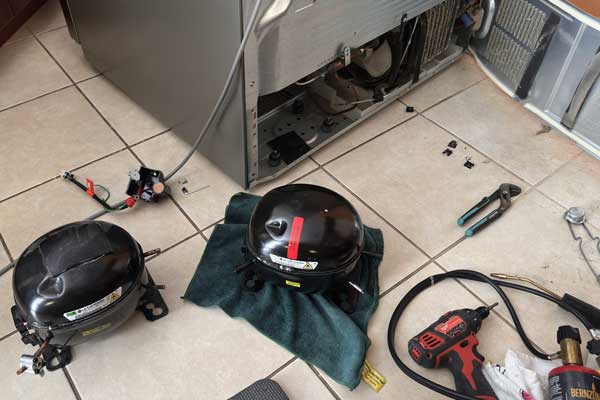
7 Things to Check When Your Refrigerator Won’t Cool
1. Verify Temperature Settings Haven’t Changed
Why this happens: Someone may have accidentally adjusted the temperature dial, or a power surge reset your settings.
How to check:
- Locate your refrigerator’s temperature control (usually inside the fridge compartment or on the control panel).
- The ideal refrigerator temperature is 37-40°F (3-4°C).
- The freezer should be set to 0°F (-18°C).
- If the dial was bumped to the “warmest” setting, adjust it back to the recommended temperature.
- Wait 24 hours for the temperature to stabilize before testing again.
2. Inspect Door Seals for Gaps or Damage
Why this matters: Worn or damaged door gaskets allow warm, humid Florida air to seep into your refrigerator constantly, making the compressor work overtime while never achieving proper cooling.
How to check:
- Close the door on a dollar bill so half is inside, half outside.
- Try pulling the bill out – it should resist slightly.
- Repeat this test around the entire door perimeter.
- Look for visible cracks, tears, or hardened rubber in the gasket.
- Check for food debris preventing a tight seal.
3. Clean Condenser Coils (Critical in Sarasota’s Climate!)
Why this is THE most common issue: Condenser coils dissipate heat from your refrigerator. In Sarasota, dust, pet hair, and humidity cause these coils to get dirty much faster than in drier climates. Dirty coils can’t release heat efficiently, leading to cooling failure.
Location: Usually found at the back of the fridge or beneath the unit behind a kick plate.
How to clean:
- Unplug the refrigerator for safety.
- Pull the fridge away from the wall (if coils are rear-mounted).
- Use a coil cleaning brush or vacuum with brush attachment.
- Gently remove all dust, pet hair, and debris.
- Vacuum the floor area as well.
- Plug back in and wait 24 hours.
How often: Every 3-6 months (more often if you have pets).
4. Check Evaporator Fan Operation
What it does: The evaporator fan circulates cold air from the freezer throughout the refrigerator compartment. If this fan stops working, your freezer might stay cold while the fridge section warms up.
How to check:
- Open the freezer door.
- Listen for a fan running (you should hear it).
- Locate the fan cover panel (usually at the back of the freezer).
- If you hear no fan noise, there’s likely a problem.
Common issues:
- Ice buildup blocking the fan.
- Failed fan motor.
- Defrost timer malfunction.
5. Ensure Proper Airflow Around the Refrigerator
Why spacing matters: Refrigerators need ventilation to dissipate heat. If your fridge is pushed too close to the wall or surrounding cabinets, it can overheat.
Proper clearances:
- 1 inch on each side.
- 1 inch on top.
- 2 inches in back.
Common issues:
- Ice buildup blocking the fan.
- Failed fan motor.
- Defrost timer malfunction.
6. Look for Frost Buildup in Freezer
What frost means: Excessive frost or ice in the freezer indicates a problem with the automatic defrost system. This frost blocks airflow and prevents proper cooling.
Check for:
- Thick ice coating on freezer walls.
- Ice around the evaporator fan area.
- Frost on food packages.
Possible causes:
- Defrost heater failure.
- Defrost timer malfunction.
- Defrost thermostat issue.
- Damaged door seal allowing humidity in.
7. Listen for the Compressor
What it is: The compressor is the “heart” of your refrigerator’s cooling system. It should cycle on and off throughout the day.
How to check:
- Feel the back or bottom of the fridge.
- You should feel warmth and possibly slight vibration.
- Listen for a low humming noise when it’s running.
Warning signs:
- No sound at all: Compressor may be dead or there’s an electrical issue.
- Clicking sounds: Start relay failure (common issue).
- Very loud humming: Compressor struggling, may fail soon.
- Runs constantly: Overworking due to another issue.
When to Call a Professional Refrigerator Repair Service
While the steps above solve many cooling problems, some issues require professional expertise and specialized tools. Here’s when you should stop troubleshooting and call for help:
Immediate red flags:
- ⚠️ Electrical burning smell – Shut off immediately, call for emergency repair.
- ⚠️ Loud banging or grinding noises – Compressor or fan motor failure.
- ⚠️ Water pooling under fridge – Drain line clog or more serious leak.
- ⚠️ Refrigerator completely dead – No lights, no sounds, no cooling.
- ⚠️ Food safety concern – Fridge has been warm for 4+ hours.
Complex repairs that need a pro:
- Compressor replacement or refrigerant recharge.
- Sealed system leaks.
- Control board failures.
- Multiple component failures.
- Warranty-covered repairs.
Name:
SRQ Appliance Repair
Address:
3959 Yellowstone Cir Sarasota 34233
Phone:
(941) 233-0641
Website:
https://srq-appliancerepair.com/
Hours:
Mon-Fri: 8:00 a.m. – 7:00 p.m.
Sat: 10:00 a.m. – 2:00 p.m.
Sun: Closed
Prevention: Keep Your Refrigerator Cooling for Years
Once you’ve got your refrigerator cooling properly again, follow these maintenance tips to prevent future problems:
Every 3 Months:
- Clean condenser coils (more often if you have pets)
- Check and clean door seals
- Verify proper temperature settings
Every 6 Months:
- Clean drain pan and drain line
- Check door alignment
- Vacuum around and under refrigerator
Annually:
- Replace water filter (if equipped)
- Professional maintenance inspection
Best Practices:
- Don’t overload the refrigerator – air needs to circulate
- Keep doors closed as much as possible
- Ensure proper clearances around the unit
- Address small issues before they become big problems
Frequently Asked Questions

Hi Sarasota! My name is Vitalii. I’ve been repairing home appliances in Sarasota and the surrounding areas for many years. I know this field inside and out! Here I share my experience and practical tips. I’d truly appreciate your shares, questions, and comments. Thank you!