


I take appliance repair Sarasota calls about smelly washers all year, but summer is insane. Three, four a week.
Mold packed so deep a surface wipe doesn’t dent it. Top-loaders can stink too, but it’s usually the drum or the soap tray. The gasket mold nightmare? That’s a front-loader problem.
Below I’ll walk you through what’s actually causing the stink, how to scrub it out properly, when the gasket is too far gone and needs replacing, and what to do differently so you’re not back here in six months fighting the same black slime all over again.
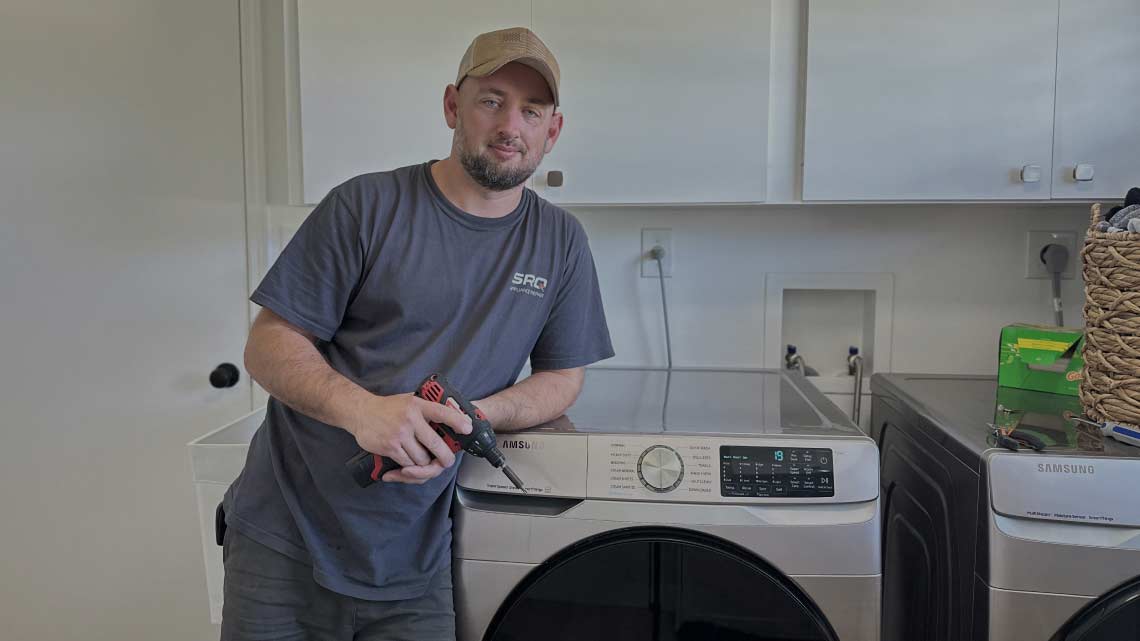
Sarasota Humidity Makes This Ten Times Worse
Your laundry room sits at 60-something percent humidity. All year. If it’s an interior closet — it’s worse. The door closes after a load, that moisture hangs around for days. The rubber never fully dries between loads unless you actively do something about it.
I had a customer south of Clark Road — bought an LG front-loader in September, closed the door after every wash like she’d always done with her old top-loader. By February the gasket was black. Five months. The machine was practically new.
Her friend down the street with the same washer? Zero mold. The difference was one thing: the friend leaves the door cracked open. That’s it. Same machine, same neighborhood, same water. One habit changed everything.
What Actually Kills the Mold (Not Vinegar)
Vinegar and baking soda work for light surface film. It does NOT work on established black mold embedded in rubber. Vinegar is acidic. It’ll slow mold growth if you catch it early — like, first-month-of-ownership early. Once you’ve got visible black colonies packed into the gasket creases, vinegar is a squirt gun at a house fire. And baking soda? Fine abrasive for scrubbing. Zero effect on mold at the cellular level.
One part bleach, four parts water. Or hydrogen peroxide — the regular 3% bottle — sprayed straight onto the rubber, no dilution. Either one will actually penetrate and kill the mold below the surface where vinegar can’t reach.
One more thing. Some washer manufacturers — LG and Samsung specifically — warn that regular vinegar use degrades the rubber gasket over time. The acidity breaks it down. So that vinegar hack people run every week? Might be slowly destroying the seal. Check your manual. Don’t have the manual? Nobody does. Google the model number plus “cleaning recommendations.”
Step by Step — the Real Cleaning Process
What you need:
- Rubber gloves on.
- Spray bottle — one part bleach, four parts water.
- Old toothbrush.
- Microfiber rags.
- Bucket of warm water for rinsing.
What to do:
- Open the door. Pull the gasket folds apart. You’ll find hair, coins, a random sock, crusty detergent, and underneath: black slime. Bottom fold is always the worst — that’s where water pools.
- Spray bleach solution into every crease. Top, sides, bottom. Saturate that bottom fold.
- Walk away five minutes — bleach needs contact time to kill spores, not just lighten the color.
- Go back and scrub the folds with a toothbrush. Black starts lifting. Some comes off easy. Some doesn’t — that’s mold grown INTO the rubber.
- If it won’t budge after two rounds of bleach-and-scrub, the rubber is pitted. Gasket needs replacing.
- Wipe down with a warm water rag. Rinse constantly and dry every fold.
- Leave the door wide open.
That Detergent Drawer You’ve Never Pulled Out
Go pull it out. There’s a release tab — press it and slide the whole tray free. Now look at the underside of the drawer. And the slot it sits in — grab a flashlight and look at the ceiling of that cavity.
That pink slime and black crud is mold feeding on soap and softener residue. It drips into the drum during every wash cycle and reseeds the gasket with fresh spores. You can scrub the gasket until your arms ache, but if the dispenser is a mold factory behind the scenes, the smell comes back in two weeks.
What to do:
- Soak the drawer in hot water and a capful of bleach. Wait fifteen minutes.
- Brush out every compartment.
- Scrub the cavity with a rag on your finger.
- Dry everything before you put it back.
Run a Tub Clean Cycle After
Gasket scrubbed, dispenser cleaned — now flush the whole system. Mold spores don’t just live on surfaces. They’re in the drum, the pump, the drain hose.
If your washer has a “Tub Clean” or “Clean Washer” cycle, use it. Toss in a washer cleaner tablet or pour half a cup of bleach into the dispenser. Empty drum. Hottest water. Let it run.
OR
No self-clean cycle? Hottest setting, longest normal cycle, bleach in the dispenser, empty drum. Same result.
Do this monthly, not yearly. SRQ Appliance Repair techs will back me up — the customers who run a tub cycle once a month almost never call back with mold issues. The ones who skip it? We see them again in three months.
When the Gasket Is Too Far Gone
Customer near Bee Ridge with three-year-old LG. She’d tried bleach, peroxide, a $15 commercial mold remover. The smell wouldn’t quit. I pulled the gasket fold open and the rubber was soft in spots — spongy, pitted, starting to let water seep through at the bottom.
That’s not a cleaning problem anymore. That’s a dead gasket. When the mold eats deep enough to change the texture of the rubber, no chemical on earth brings it back. The seal is compromised. It’ll start leaking. Some of my customers develop skin rashes or sinus issues from the spores — mold on the gasket means mold touching every piece of clothing that comes out of that machine.
New washer door seal replacement: $180–$250 installed. Appliance repair in Sarasota FL techs swap these out weekly. It takes an hour. Fresh gasket, no smell, no spores. And this time, follow the prevention steps so you don’t end up back here in a year.
Keeping It From Coming Back
- Leave the door open after every load. EVERY load. Air has to move across that gasket or the moisture sits and mold returns within weeks.
- Wipe the bottom gasket fold dry after the last load of the day. Thirty seconds with a rag. Hit the lowest crease where water pools. This single habit — honestly — eliminates 90% of the problem.
- HE detergent only in HE machines. And use half what you think you need. Excess suds coat the drum and gasket and become mold food. I watch people pour a full cap of soap into every load. Half a cap. That’s plenty.
- Monthly tub clean cycle. Bleach or a cleaner tablet. Non-negotiable in this climate.
- Don’t let wet laundry sit in the drum. Move it to the dryer within the hour. Six hours of wet clothes in a sealed drum at 75 °F is exactly how mold colonies start.
When You Need a Tech
Cleaning, wiping, monthly cycles — that’s on you, and it handles 80% of washing machine mold situations. But if the smell comes back within days of a deep clean, or you’re seeing mold reappear in spots you KNOW you scrubbed clean, the problem is behind the drum or inside the pump housing. Places you can’t reach without pulling the machine apart.
A same day washer repair tech can pull the gasket, inspect the drum backside, clean the pump housing, and swap anything that’s too far gone. One visit, smell gone — actually gone, not masked.
And for the folks who waited too long and now the gasket is leaking on top of smelling like a swamp — emergency washer repair gets someone there before the floor takes water damage.
Name:
SRQ Appliance Repair
Address:
3959 Yellowstone Cir Sarasota 34233
Phone:
(941) 233-0641
Website:
https://srq-appliancerepair.com/
Hours:
Mon-Fri: 8:00 a.m. – 7:00 p.m.
Sat: 10:00 a.m. – 2:00 p.m.
Sun: Closed
Frequently Asked Questions

Hi Sarasota! My name is Vitalii. I’ve been repairing home appliances in Sarasota and the surrounding areas for many years. I know this field inside and out! Here I share my experience and practical tips. I’d truly appreciate your shares, questions, and comments. Thank you!