


Before you diagnose anything, answer one thing: does the smell go away when you turn the oven off?
- If the smoke or smell fades once the oven’s off and cooling, you’re almost certainly dealing with something on the food side — grease, spilled drippings, residue. Annoying, cleanable, not dangerous. This guide covers electric ovens — the kind in most Sarasota kitchens.
- If the burning smell keeps going after you shut the oven down, or it’s electrical and sharp, that’s the appliance itself — wiring, a relay, a control board — and it moves straight to breaker-off territory.
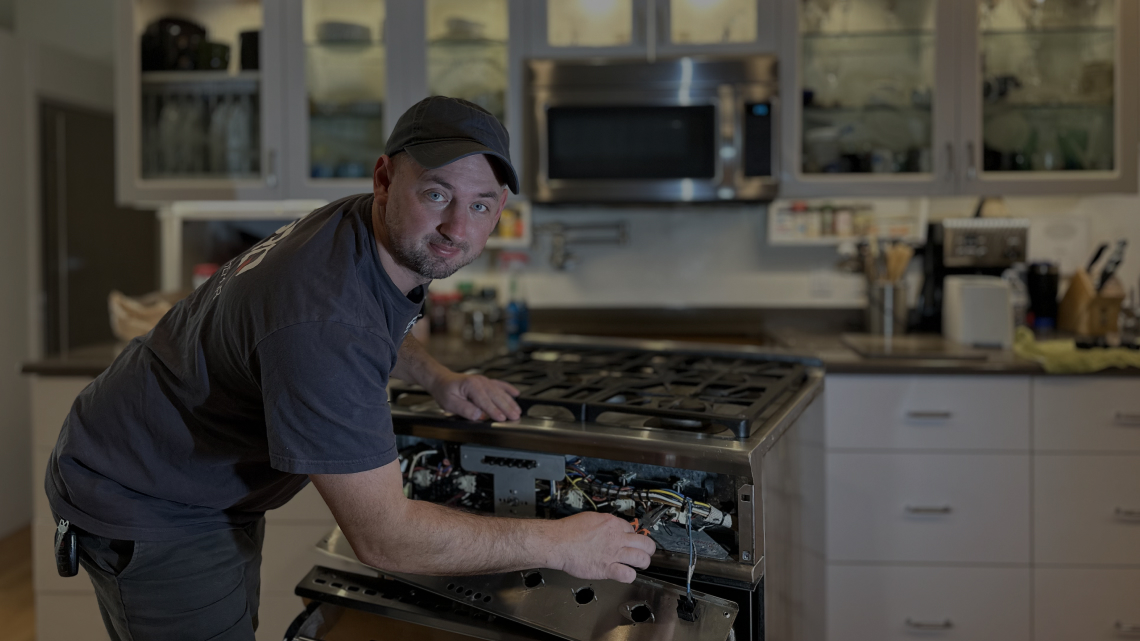
That single distinction sorts most of these calls. I run appliance fix Sarasota calls on smoking ovens constantly, and honestly a big share turns out to be cleanup, not repair. But a real chunk is genuinely serious, and the smell-after-shutoff test is how I sort them on the phone before I’ve left the shop.
The Smells You Can Cook Through
Some smells are just cooking. Nothing’s wrong with the oven.
- A faint smoky smell when you’re roasting a fatty cut, searing at high heat, or broiling something greasy — that’s fat vaporizing, and it’s completely normal. It clears when the oven cools.
- Same with a little wisp of smoke off a drip that landed on the element earlier: it burns off and it’s done.
The pattern with harmless smells: they’re tied to what you’re cooking, they fade fast, and they don’t come back once the oven’s clean and cool. If that describes yours, wipe the cavity down and move on with your day. No repair, no worry.
The line gets crossed when the smell has nothing to do with food and won’t quit. That’s the next section.
The Smells That Mean Breaker Off — Now
Some smells are the oven telling you something is failing inside it. Treat these as electrical until proven otherwise.
- Sharp, acrid burning plastic with no plastic in sight.
- An ozone-y, metallic tang — that’s the smell of electricity arcing.
- A distinct hot-wire, electrical-burn odor.
Any of these, especially if they linger after you power the oven down, mean stop.
Here’s the move: shut the oven off at the breaker, not just the knob. Ventilate the kitchen. Don’t run it again to “see if it does it more” — arcing and overheating wiring get worse fast, and worse eventually means fire.
These aren’t wait-till-next-week problems. An appliance repair in Sarasota FL tech can pin down an arcing terminal or a carbonizing relay in minutes with a multimeter, and same-day matters when the alternative is running a fire risk.
Grease: The #1 False Alarm
Most smoking-oven calls end here, and it’s the happiest outcome because there’s nothing to fix.
You cook, food splatters, some lands on the bake element at the bottom of the cavity. Next time that element glows red, the splatter chars right on the metal — you’ll usually see it as dark crusty spots or a slick film. That’s your smoke source, every single use, until it’s cleaned off.
The fix: let the oven cool completely, then wipe the element with a damp cloth. Warm water, that’s it — no steel wool, no metal scraper, nothing that gouges the coil. Check the broil element up top too if you’ve broiled anything greasy lately. And look at the cavity floor right under the element, where drippings from a leaky casserole bake on and smoke forever until removed.
One thing: don’t reach for self-clean just because it’s smoking. That cycle runs the oven brutally hot and causes more repair calls — blown thermal fuses, stressed boards — than the smoking ever would. A damp cloth beats self-clean here every time.
Burning Plastic: Find It or Fear It
Burning plastic is the smell that puts people on edge, and it should — but half the time there’s an innocent answer sitting right in the oven.
SOLUTION: First, hunt. Pull everything out. Check the cavity floor and roof, check the back wall, check the storage drawer under the range. A silicone spatula slipped behind a rack, a plastic-handled utensil melting in the drawer, a bag someone left inside — I find the culprit and it walks out with me more often than you’d think.
But if you tear the oven apart and there’s no plastic anywhere, the story changes. Now that burning-plastic smell is most likely melted wire insulation. Wires feeding the element run at 240 volts, and a loose connection arcing or a relay drawing too much current cooks the insulation until it gives off exactly that odor. It does not clear on its own, and running the oven risks a fire.
The rule I give people: if it smells like burning plastic and there’s no plastic in the oven, treat it as electrical and kill the breaker. A dying control board smells the same way for hours before it fully fails — same response.
Brand-New Oven? That Chemical Smell Is Normal
If your oven was installed in the last month and smells like hot chemicals or plastic when it heats, relax — that’s expected, and it’s temporary.
New ovens off-gas for the first eight to ten heating cycles. What you’re smelling is the protective oil on the metal parts burning off, the insulation heating for the first time, and leftover manufacturing residues. It’s harmless and it fades.
SOLUTION: Speed it up with a burn-in: pull everything out of the cavity, crack a window, set the oven to 400°F, and let it run empty for about an hour. Do that once or twice and the smell’s gone with normal use.
One catch — make absolutely sure no packaging got left inside at install. Styrofoam blocks and plastic wrap around internal parts are easy to miss, and that burning smell isn’t off-gassing, it’s melting plastic. If a chemical smell is still hanging around a month in, it’s not off-gassing anymore either.
The Chemical Smell That Won’t Quit
An oven a year or two old that suddenly smells like solvents every time you use it usually has one of a couple things going on.
- Most common: cleaning-product residue. Whatever spray you used last left a film on the cavity walls that smells when heated.
- SOLUTION: Wipe it down with a damp cloth, run the oven empty at 350°F for twenty minutes with a window open, and it typically clears. This is exactly why I steer customers away from commercial oven cleaners — a baking-soda paste and water clean nearly as well without leaving a smell that lingers for weeks. Sarasota humidity can make that chemical film hang around longer, too.
- Less common: damp insulation. If the oven lives in a garage install or the house had a plumbing or roof leak, moisture wicks into the insulation and smells strange when heated. That one won’t fade on its own and needs a tech to sort out.
Smoke From the Vent, Not the Cavity
Electric ovens vent through a small opening — usually at the back or up on the cooktop surface. A little smoke drifting out while you roast a fatty cut is normal; that grease vapor has to go somewhere.
Heavy smoke from the vent, though, usually traces right back to buildup inside the cavity, not a vent fault. Clean the cavity and the vent smoke drops off. If you’ve got a convection model and the fan isn’t spinning, smoke can also pool before it clears — worth checking whether that fan actually runs.
The Hard-Stop Warning Signs
Cut power at the breaker and call a tech immediately if any of these show up:
- The burning smell is electrical or plasticky and doesn’t clear after you shut the oven off.
- Smoke coming from behind the control panel rather than inside the cavity.
- Any visible sparking or arcing, especially near the element or the terminal block.
- Scorched or discolored wiring you can see through the back panel.
- The breaker trips every time the oven runs.
None of these are “keep an eye on it.” Breaker off, ventilate, get someone out. An affordable oven repair tech would rather diagnose a smell that turns out minor than get called after it becomes a fire.
What You Can Do vs. What a Tech Should
Clean line between the two.
- Yours to handle: wiping grease off the elements and cavity, clearing baked-on drippings, hunting down melted plastic, running a burn-in on a new oven, and cleaning-product residue. That’s the majority of smoke calls, and it costs nothing but a rag and some time.
- Tech territory: anything electrical — melted wire insulation, arcing terminals, a carbonizing relay, a dying control board, damp insulation replacement. These need a multimeter to locate and live around 240 volts, which is not a guess-and-check situation.
SRQ Appliance Repair techs follow the nose on these — grease gets cleaned and honestly called a non-repair, burning plastic gets the panel pulled and the wiring inspected, electrical smells get the terminal block and relays tested. Common parts ride on the truck, so the real repairs usually wrap in one visit.
Name:
SRQ Appliance Repair
Address:
3959 Yellowstone Cir Sarasota 34233
Phone:
(941) 233-0641
Website:
https://srq-appliancerepair.com/
Hours:
Mon-Fri: 8:00 a.m. – 7:00 p.m.
Sat: 10:00 a.m. – 2:00 p.m.
Sun: Closed
Frequently Asked Questions

Hi Sarasota! My name is Vitalii. I’ve been repairing home appliances in Sarasota and the surrounding areas for many years. I know this field inside and out! Here I share my experience and practical tips. I’d truly appreciate your shares, questions, and comments. Thank you!