


You shove the door, it mostly shuts, dinner cooks anyway. So who cares about a little gap, right? Here’s who — your electric bill and whatever you’re trying to bake. Heat leaks straight out that opening, the oven can’t hold its number, and the elements just keep firing to make up for it. Meanwhile one side of your tray browns and the other sits pale. And there’s the heat itself. A door that won’t latch dumps hot air into the kitchen, which in Sarasota is the last thing you want. Self-clean ovens are worse off — that door has to seal or the cycle won’t even run safely.
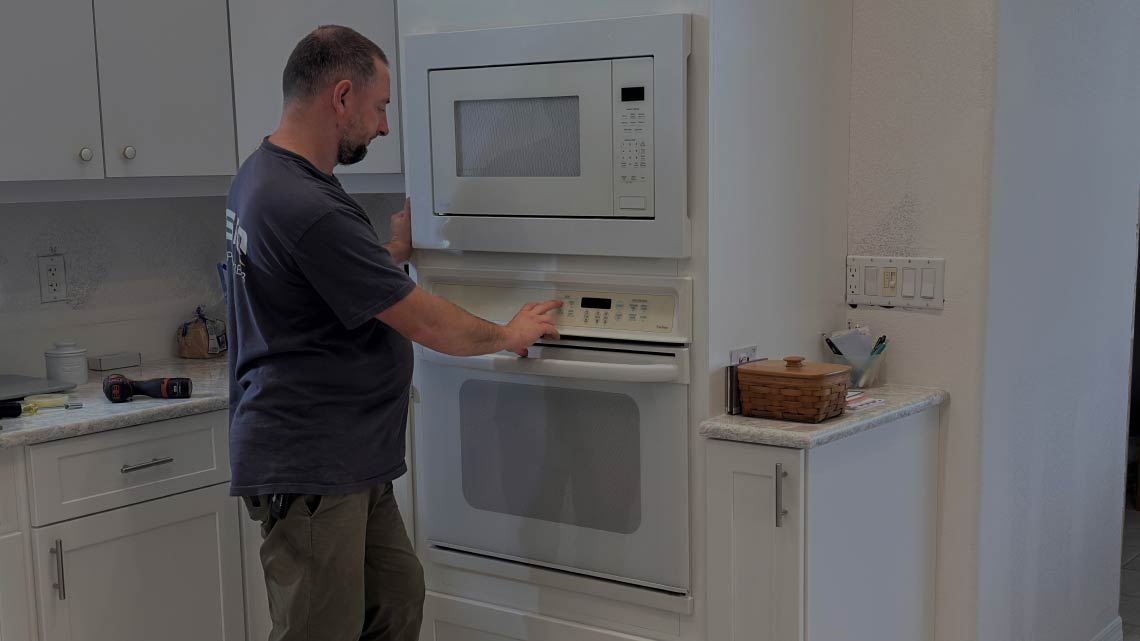
I get appliance repair Sarasota calls on this constantly, and it almost always comes down to one of a few parts. Hinges, springs, the gasket, or something jammed in the way. I’ll walk them the way I’d actually check them on a service call. All of this is for electric ovens.
Watch the Gap Close
- Don’t grab a screwdriver yet. Open the door all the way, then shut it slow and just watch where it meets the frame. The gap basically tells you what’s wrong.
- Sagging low with a gap across the top? Hinges. The door’s drooping under its own weight.
- Crooked, gap on one side only? A hinge is bent or jumped its mount, and now the whole door’s twisted.
- Closes but bounces back open an inch or so? Something’s in the way, or that self-clean latch is caught halfway across the opening.
- Shuts fine but you still feel heat sneaking out? That’s the gasket, not the door.
Figure out which one you’ve got before you start pulling parts — I’ve watched people replace a perfectly good hinge because they never looked at the gap first.
One more tell: is the door floppy and loose, or stiff? Loose points at springs, stiff points at something jammed.
Hinges Go First
Nine times out of ten, this is it. Oven hinges haul a heavy door through thousands of open-and-shut cycles, and they wear out. Each hinge has an arm that drops into a slot on the oven frame. Lean on an open door, set a heavy roasting pan on it, let a kid use it as a shelf — and that arm wears, bends, or pops clean out of its slot. Once it does, the door sags and stops lining up. It won’t sit flush no matter how hard you push.
WHAT TO DO: Look at both hinges where the door meets the body. One lower than the other? An arm out of its slot? Sometimes you can lift the door a hair and drop a popped hinge back where it belongs — easy win. But a bent or busted hinge is a different story. These things are under brutal spring tension and they’ll snap shut on your fingers if you’re careless.
That’s the spot where I’d call an appliance repair in Sarasota FL tech instead of risking a trip to urgent care over a $40 part.
The Springs Behind Them
Tied into those hinges are the door springs. They’re what makes the door feel balanced instead of slamming shut or flopping open. When one stretches out or snaps, the door tells on itself. A dead spring makes the door feel heavy, want to fall open, or hang lopsided so it won’t close flush on that side. Sometimes you hear a clunk. Sometimes you just notice one corner riding lower than the other.
Depending on the oven, the springs hide behind the side panels or down under the door assembly. Same deal as the hinges — loaded with stored force, and genuinely dangerous to mess with if you don’t know what you’re doing. I replace these all the time and I still respect them. For most folks this is a straight-up call-a-tech job, no shame in it.
When the Gasket’s Shot
If the door actually latches but heat still leaks, quit blaming the door — look at the gasket. That’s the rubber or fiberglass seal running around the door or the oven opening, and it’s what makes the whole thing airtight when you shut it. Years of heat beat it up. It flattens, goes hard and brittle, tears, or pulls loose from the little clips holding it on. Once that happens the door can close all the way and still leave a gap that bleeds heat, because the seal isn’t squeezing shut like it used to. And sometimes a gasket that’s come off its hooks bunches up and physically keeps the door from shutting that last bit.
WHAT TO DO:
- Run your hand near the door edge while the oven’s hot — carefully — and feel for escaping heat.
- Then let it cool and eyeball the gasket for flat spots, cracks, gaps, and sections that popped off their mounts.
- Good news here: the gasket’s one of the friendlier parts. A lot of them just hook back into place.
An affordable oven repair tech can tell you fast whether it’s the seal or something structural before you buy anything.
Check for Something Stuck
Check it early, because it’s free. A rack shoved out too far, a cookie sheet poking past the edge, a pan handle sticking out, a chunk of food wedged down in the door channel — any of that stops the door and gets blamed on a broken hinge. Pull everything out. Run your hand around the opening and along the bottom lip. Clear whatever’s in the way.
While you’re at it, make sure the racks are actually seated in their slots and not sitting crooked. A rack that’s half hanging out holds the door open just enough to kill the seal.
Takes two minutes and fixes way more “broken” doors than you’d believe.
The Self-Clean Latch Trap
This one’s only on ovens with self-clean. There’s a latch — motorized or manual — that locks the door shut during the cycle so nobody cracks it open at 800 degrees. When that latch jams halfway, it parks itself across the opening and physically blocks the door from closing.
WHAT TO DO:
- Look along the top of the frame for a hook or bar sitting where it shouldn’t be. If the latch is out of position, the door won’t seat until you free it.
- Sometimes running a full self-clean cycle and letting it finish properly resets the thing.
- Sometimes the latch motor’s just dead and the assembly needs swapping.
Door stopped closing right after you ran self-clean? This is almost certainly it — the latch never pulled back. I see it enough that it’s honestly one of the reasons I tell people to skip self-clean and wipe the oven by hand.
A Door That’s Just Bent
Once in a while the door itself is the problem — physically bent or knocked out of whack. People lean on them, stand on them (yeah, the open door makes a tempting step stool), bang them. A bent door won’t sit square against the frame and no amount of hinge fiddling fixes it. The two door panels can also shift or separate, which throws the fit off too.
If it’s just slightly off, reseating the hinges sometimes pulls it back into line. But a truly bent door, or one where the panels have shifted, usually means repairing or replacing the door assembly. A tech can eyeball it and tell you whether it’s worth fixing — and on an old oven, a new door sometimes costs enough that you’re better off replacing the whole thing.
What That Gap Does to Your Power Bill
Let me spell this out, because people live with a leaky door way too long. An oven that can’t seal runs its elements a lot harder than it should — cycling on and off constantly to replace the heat escaping through the gap. Down here that’s a double whammy. You’re paying to heat an oven that won’t stay hot, and you’re dumping extra heat into a kitchen your AC is already straining to keep cool.
Forget the bill for a second — a leaky door also means uneven bakes, longer cook times, and food that’s raw on the side by the gap. If your baking’s gotten worse and the oven seems to run forever lately, check the door seal before you go blaming the thermostat. A quick same day oven repair visit for a hinge or a gasket usually pays for itself in power saved and dinners not ruined.
Fix It Yourself or Call Someone
Clearing junk and crooked racks, hooking a loose gasket back on, spotting a hinge that popped its slot, checking if the self-clean latch is stuck. That knocks out a good chunk of won’t-close doors for free or close to it.
Bent or broken hinges, door springs (seriously, these can hurt you), a dead self-clean latch, a bent door, anything where the structure’s off. Hinges and springs store enough force to injure you — this isn’t the project to wing.
SRQ Appliance Repair handles hinges, springs, gaskets, and latches across every brand and keeps the common parts on the truck, so most of these wrap in one visit.
Name:
SRQ Appliance Repair
Address:
3959 Yellowstone Cir Sarasota 34233
Phone:
(941) 233-0641
Website:
https://srq-appliancerepair.com/
Hours:
Mon-Fri: 8:00 a.m. – 7:00 p.m.
Sat: 10:00 a.m. – 2:00 p.m.
Sun: Closed
Frequently Asked Questions

Hi Sarasota! My name is Vitalii. I’ve been repairing home appliances in Sarasota and the surrounding areas for many years. I know this field inside and out! Here I share my experience and practical tips. I’d truly appreciate your shares, questions, and comments. Thank you!