


- The lint screen is packed and choking the airflow.
- The vent duct is clogged, kinked, or too long.
- The flap on the outside wall won’t open, or something’s nesting behind it.
- The drum’s too full to tumble properly.
- Somebody left it on a low-heat or short timed cycle.
- The moisture sensor is dirty and ending the cycle early.
- The heat has gone weak — tired element or thermostat.
- The blower wheel is caked with lint and barely moving air.
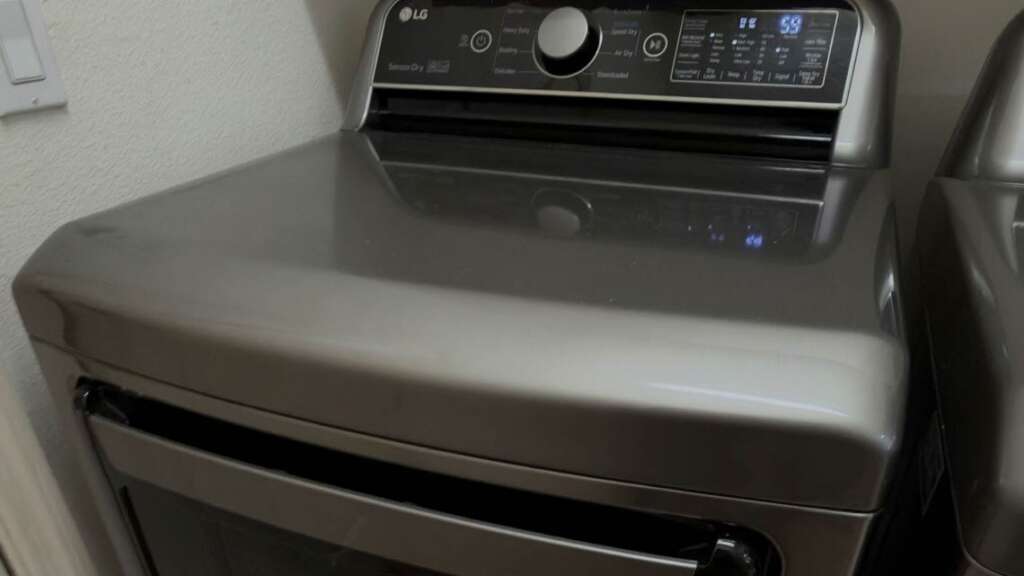
You run a load, it finishes, and the clothes come out warm but still damp around the seams. So you set it going again, and an hour later you’re standing there with the same half-dry towels. By the third round most people decide the dryer is on its way out. It usually isn’t.
This is one of the calls I get most, and it’s confusing because the machine looks perfectly healthy — the drum turns, there’s heat in there, the lights are on. But running and drying aren’t the same thing. A dryer dries by moving warm air through the clothes and pushing the moisture outside, and when a load needs two or three cycles to finish, something in that path has quietly given up. Nearly always it’s airflow, and a good share of the fix costs nothing. This guide is for electric dryers — gas plays by different rules. If you’d rather not deal with it, an appliance repair Sarasota tech will diagnose it quickly, but the free checks are worth trying first.
1. Start at the Lint Screen
It’s the simplest thing on the list, and the one everyone swears they already handled. A loaded screen strangles the airflow before it even reaches the drum — and in our humidity, where the dryer’s already fighting damp air, that bites faster than it would up north.
💡 Tip: A screen can look spotless and still be blocking you, because dryer sheets leave a waxy film across the mesh you can’t really see. Once a month, hold it under the tap — if the water beads up instead of running straight through, that film is your problem. Scrub it clean and dry it before it goes back.
2. The Vent Duct Is the Usual Culprit
If the screen’s genuinely clean and the dryer’s still crawling, the vent is almost certainly where it’s hiding. Lint slips past the screen a little at a time until the pipe out through your wall is barely open. It goes bad a few ways. Sometimes it’s a solid plug of lint deep in the run, sometimes the hose is crushed flat because the dryer’s shoved too tight to the wall, and sometimes the run is just too long, every bend catching a little more lint.
💡 Tip: Pull the hose off the back, set the dryer to air-fluff, let it run a minute, and go feel the air at the vent on your outside wall. Strong flow means the clog is in the hose. Weak or nothing means it’s deeper in the duct. Either way, clear the whole line — and you’re taking out a real fire hazard while you’re there. If the run disappears into a wall or the roof, a Sarasota FL appliance repair tech has the rods to reach it.
3. Check the Flap Outside
While it’s running, step outside and find the vent hood. That flap ought to be blown open with warm air coming out. If it’s painted shut, rusted stiff, or packed with a bird or lizard nest — common down here — the exhaust has no way out, and the drying stalls at the finish line. Clear it and make sure the flap swings freely.
4. You Might Be Overloading It
Packing more into a load doesn’t save you a load; it just turns one load into a long one. The clothes need room to tumble so the hot air gets between them; fill the drum to the top and it mats into a wet ball, the outside dry and the middle soaked.
💡 Tip: Leave the top quarter of the drum empty, and give bulky things their own load — a comforter dries far better alone than buried in a packed drum.
5. Sometimes It’s Just the Settings
Now and then there’s nothing wrong at all — somebody just moved a knob. Delicate and low-heat cycles run cool on purpose, and a short timed cycle quits before anything heavy is done. I see it constantly after a houseguest runs a load their own way. Before you start looking up part numbers, check the dial — a five-second look that can save you an afternoon.
6. The Moisture Sensor Gets Dirty
Most dryers built in the last fifteen years have a couple of thin metal strips inside the drum that sense how wet the clothes are and end the cycle once they read dry. Over time, fabric-softener residue builds up on those strips, so the sensor reads its own film instead of your laundry, decides the load is dry, and shuts off while your towels are still damp.
💡 Tip: Those two strips usually sit just inside the door, below the lint slot. Wipe them with a cotton ball and rubbing alcohol — it takes a minute, and it’s surprisingly often the fix for a dryer that quits early.
7. When the Heat Is Weak, Not Dead
Say the airflow checks out and the drum still feels more warm than hot. The heat side might be fading rather than fully dead. A heating element can crack partway and still throw off some warmth, just not enough to finish a load, and a thermostat on its way out can cut the heat early. It runs, feels lukewarm, and never gets hot enough to do the job. This is where you need a meter and most people stop guessing. An affordable dryer repair check sorts weak heat from a plain airflow problem before you spend anything on parts you may not need.
8. The Blower Wheel Behind the Panels
The blower wheel is the fan that moves the air through the dryer. Lint cakes onto it over the years, or the wheel cracks and slips on its shaft, and either way it can’t move the air it used to, even with a spotless vent — sometimes with a thumping or a roar. It lives behind the panels, so this one’s a teardown rather than a weekend job, but it’s worth remembering when everything else has come back clean.
Slow-Drying Causes at a Glance
I’ll be honest with you — on most of these ‘it takes three cycles’ calls, I never open my parts bag. It’s a vent packed with lint, or a screen glazed over with softener. Clean that vent line once a year, the whole run. It costs you an afternoon, it brings the drying right back, and it’s the one thing in that laundry room that can actually start a fire. Parts only come into it after the air’s moving right and the clothes are still coming out wet.
— Yaremych Vitalii, Owner of SRQ Appliance Repair
What You Can Handle vs. When to Call
the lint screen, the full vent run, the outside flap, how much you’re loading, the cycle setting, and the moisture sensor. That covers the large majority of slow dryers, for free.
a weak element, a failing thermostat, a blown thermal fuse, or a caked blower wheel. Those need a meter, and they sit behind the panels next to 240-volt wiring. A same day dryer repair visit gets you a straight answer and the correct part on the first trip.
Key Takeaways
- It’s airflow before anything else. The dryer dries by pushing warm air through the clothes and out the wall, so when that’s blocked, they stay wet however long it runs.
- Work it free and in order: screen, vent, outside flap, load size, cycle, sensor. The fix is almost always on that list.
- The vent is the usual culprit, and our humidity makes a blocked one worse. Clean the whole line once a year.
- Only after the air checks out do you look at parts — and that’s a job for a tech with a meter.
Name:
SRQ Appliance Repair
Address:
3959 Yellowstone Cir Sarasota 34233
Phone:
(941) 233-0641
Website:
https://srq-appliancerepair.com/
Hours:
Mon-Fri: 8:00 a.m. – 7:00 p.m.
Sat: 10:00 a.m. – 2:00 p.m.
Sun: Closed
Frequently Asked Questions

Hi Sarasota! My name is Vitalii. I’ve been repairing home appliances in Sarasota and the surrounding areas for many years. I know this field inside and out! Here I share my experience and practical tips. I’d truly appreciate your shares, questions, and comments. Thank you!