


- Squeal or screech — a dry idler pulley or drum bearing/rollers crying for grease.
- Rhythmic thump — flat-spotted drum rollers (or just an unbalanced load).
- Grinding — a bearing, rollers, or motor near seizing. Stop and check it.
- Rattle — loose change or an object in the drum, or a cracked blower wheel.
- Scrape or rub — worn drum glides or felt seal letting the drum drag.
- Hum or buzz — a straining or worn motor, or a seized pulley.
- Click, tick, or tap — a drive belt starting to split.
- Rumble or vibrate — an unlevel machine, worn rollers, or loose feet.
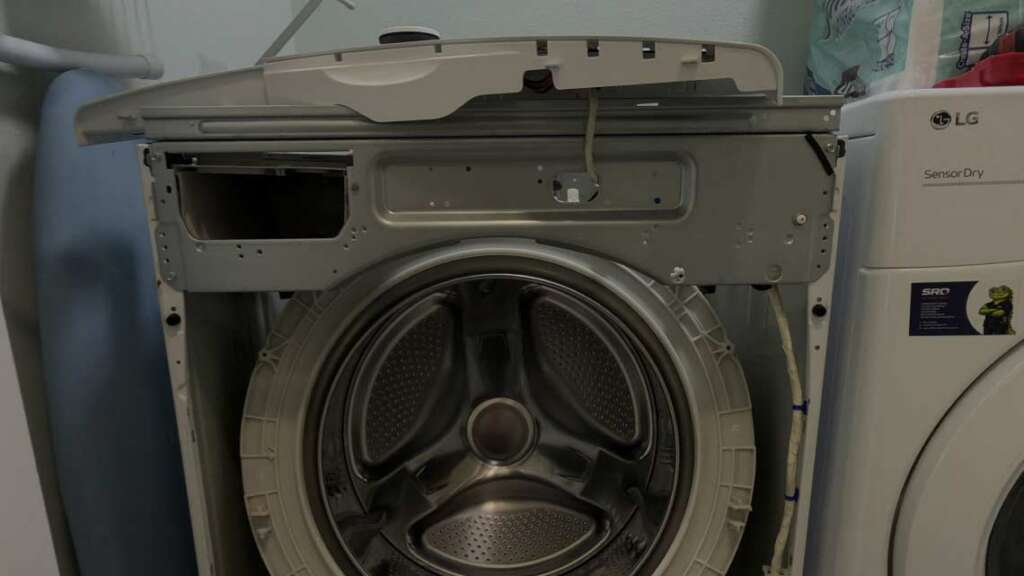
A dryer is never truly silent — there’s always some tumble and a bit of whoosh. But you know your own machine, and the day it starts making a noise it wasn’t making last month, something inside is usually wearing out. Here’s the good part: dryers tell on themselves. Each sound points to a specific part, so once you learn to read the noise, you’re already halfway to knowing what the fix will take.
That’s how I work every noisy-dryer call. The first question I ask isn’t “what brand” — it’s “describe the sound.” A squeal and a grind send me after completely different parts. This guide walks the common dryer noises one by one, what each usually means, and which ones you can chase yourself. When it turns into a part swap, an appliance repair Sarasota tech can confirm it in a few minutes. Everything here is for electric dryers.
First, Pin Down the Sound
Before you name the noise, note two things: when it happens and where it comes from. Does it squeal the second the drum turns, or only once it’s warmed up? Put your ear near the back panel, then the front, then down low. A sound from the rear usually means the motor, blower, or rear drum support; up front it’s often the drum glides or front bearing.
💡 Tip: Unplug the dryer and spin the drum by hand. If it squeaks or grinds turning by hand with no power, you’re dealing with a roller, bearing, or pulley — not the motor.
1. Squealing or Screeching
A high, sharp squeal — what people type in as “dryer squeaking” — almost always comes from a part that’s lost its lubrication. The two suspects: the idler pulley that keeps tension on the drive belt, and the drum bearing or rollers the drum rides on. Dry grease means metal on metal, and you get that chirp, usually worst at startup.
It won’t fix itself, and it only gets louder. Sarasota FL appliance repair techs swap idler pulleys and rollers constantly — cheap wear parts, and catching the squeal early keeps it from becoming a seized belt or a chewed-up drum.
2. Thumping and Banging
A rhythmic thump — thud, thud, thud, once per rotation — points at the drum rollers. Over the years they wear flat on one side and the drum drops onto that flat spot each turn.
💡 Tip: Rule out the free causes first. Pull the load, run the dryer empty, and listen. If a bunched comforter or a stray sneaker was the culprit, the thump disappears. Still thumping empty? Now it’s mechanical — rollers, sometimes the bearing behind them.
3. Grinding — Don’t Ignore This One
Grinding is the sound you don’t sit on. It’s metal wearing on metal with no cushion left — a drum bearing or rollers well past the squeal stage, or a motor on its way out. A grinding dryer is close to seizing, and running it can snap the belt or burn up the motor. Stop using a grinding dryer until it’s checked — the grinding part is cheap next to what it wrecks when it locks up.
4. Rattling
Often the least serious noise — and sometimes free. Start with the drum: coins, a zipper pull, a forgotten AirTag, or a button stuck in a baffle rattles on every turn. If it’s empty and still rattles, look at the blower wheel (debris or a crack) or a loose back panel.
💡 Tip: Run your fingers around the baffles — the raised ridges inside the drum. Small objects wedge in there and stay put, rattling for weeks until someone fishes them out.
5-6. Scraping or Rubbing
A dragging, scraping sound — like the drum is sanding on something — usually means the drum glides or the felt seal up front have worn through. Those pads let the drum spin smoothly inside the housing; worn out, bare drum meets bare metal. A defined repair, worth doing before the drum itself takes damage.
7. Humming or Buzzing
A low hum can be normal motor background. A loud hum or buzz that’s new is the one to watch. On an electric dryer, a straining motor hums when its bearings wear or when something jams the blower. If the dryer hums but the drum won’t spin at all, that usually means a snapped belt or a jam stopping it cold.
8. Clicking, Ticking, or Tapping
A light, repeating tick that keeps time with the drum usually traces to the drive belt. When a belt splits or frays at a seam, the torn section slaps the drum wall once per rotation. A small object in a baffle does the same.
💡 Tip: A tap is an early warning, not an emergency — but don’t ignore it. A splitting belt is living on borrowed time, and it’ll snap and leave you with a dead-still drum and a humming motor, usually within a couple of weeks.
Dryer Noise Chart
Nine out of ten noisy dryers I get called to, the part making the sound costs less than the service call. The trouble is people wait — a squeal they tune out for two months comes back as a grind, and by then the cheap roller has already scored the drum. Catch the noise early and it’s almost always a small, affordable fix.
— Yaremych Vitalii, Owner of SRQ Appliance Repair
The Free Checks: Load, Level, Loose Change
Three things cause a surprising share of “noisy dryer” calls, and none cost a dime:
- The load. One heavy item — a bath rug, a soaked hoodie — bangs around off-balance. Spread it out or dry it with other things.
- The level. A dryer that rocks on uneven Florida tile knocks on spin. Set a level on top and adjust the leveling legs until it sits dead still.
- Loose change. Check pockets every load. Coins are the number-one rattle, and they can crack a blower wheel if they slip past the drum.
💡 Tip: An affordable dryer repair always starts with these free checks — run them before you assume the worst or buy a single part.
What You Can Handle vs. When to Call
clearing the drum and baffles, tightening a loose panel, leveling the machine, redistributing a heavy load, checking pockets.
drum rollers, idler pulley, drive belt, drum bearing, blower wheel, drum glides, and anything grinding or seized. These sit behind the panels, often mean pulling the drum, and need the belt routed right on reassembly. A same day dryer repair visit gets the correct wear part in and the dryer quiet again in one trip — and catches the $20 roller before it wrecks a $300 drum.
Key Takeaways
- Every dryer noise maps to a part. Identify the sound first, and you’ve narrowed the repair before anyone opens the machine.
- Squeals, ticks, and taps are early warnings. Grinding is late. Never keep running a grinding dryer — it’s close to seizing.
- The free checks solve a lot of calls. Load balance, a level machine, and empty pockets fix a real share of “noisy dryer” complaints.
- Wear parts are cheap; waiting is what’s expensive. A roller, idler pulley, belt, or glide costs little — until it drags a pricier part down with it.
- When it needs a teardown, call a pro. Pulling the drum and routing the belt correctly is a same-day job for a tech, not a guess-and-swap.
Name:
SRQ Appliance Repair
Address:
3959 Yellowstone Cir Sarasota 34233
Phone:
(941) 233-0641
Website:
https://srq-appliancerepair.com/
Hours:
Mon-Fri: 8:00 a.m. – 7:00 p.m.
Sat: 10:00 a.m. – 2:00 p.m.
Sun: Closed
Frequently Asked Questions

Hi Sarasota! My name is Vitalii. I’ve been repairing home appliances in Sarasota and the surrounding areas for many years. I know this field inside and out! Here I share my experience and practical tips. I’d truly appreciate your shares, questions, and comments. Thank you!