


The drum turns, the timer counts down, the machine hums along like it always has — and you pull out a load that’s still damp and stone cold. A dryer that runs but won’t heat is one of the most common calls I get around here, and the maddening part is it looks like the thing is working fine. It isn’t. The heat side quit while the motor side kept right on going, so you get all the spinning and none of the drying.
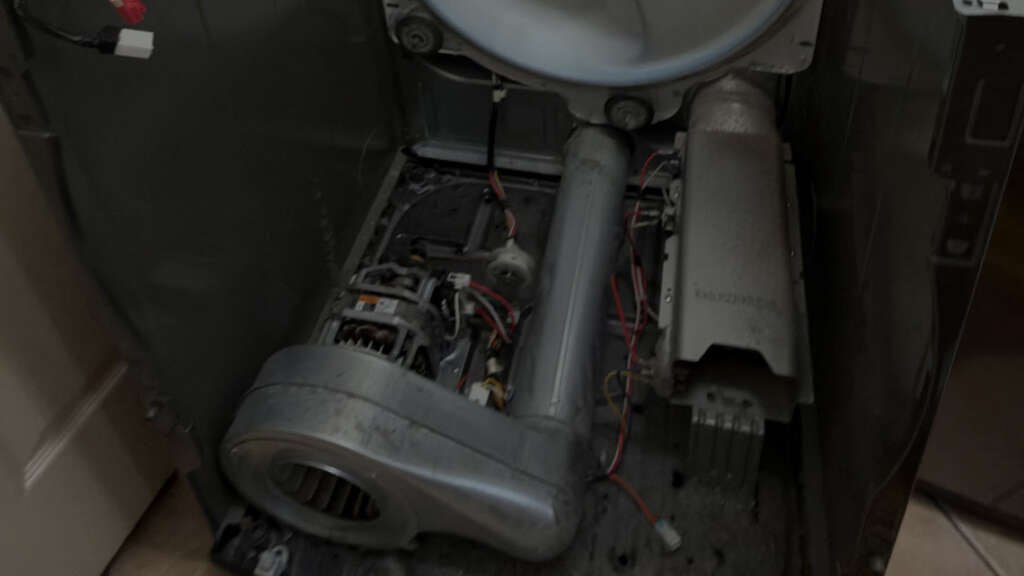
Good news before we start: a no-heat dryer is almost always a cheap part, not a dead machine. The trick is figuring out which part, and in what order to check, so you’re not dropping money on a heating element when the real problem is a two-dollar fuse. This guide covers electric dryers only — gas units run on different parts. And if you’d rather just hand it off, any honest appliance repair in Sarasota FL shop carries these components on the truck, so most no-heat jobs wrap up in a single visit.
Heat or No Heat — Narrow It Down First
Before you pull out a single tool, sort out which problem you’ve actually got. A dryer with zero heat — cold air the whole cycle — points one direction. A dryer that gets a little warm but never hot, or dries a load after three runs, points somewhere else entirely.
- The first is usually an electrical part that failed outright: a blown fuse, a dead element, a tripped thermostat.
- The second is nearly always airflow.
Same words on the phone — “my dryer stopped getting hot” — two completely different repairs behind it. Sort that out and you’ve already cut the job in half before you’ve moved the machine.
Clean the Vent Before You Touch a Tool
I know you came here for a part. But the vent is free to check and it’s behind more no-heat and weak-heat calls than any single component — especially down here. Sarasota humidity means your dryer is already fighting to pull moisture out of the air, and a lint-packed vent chokes it the rest of the way. Restricted airflow makes the dryer run too hot, and when it overheats it trips a safety device that cuts the heat. So that clog doesn’t only slow your drying — it’s frequently the exact thing that blew your fuse to begin with.
What to do:
- Pull the dryer away from the wall.
- Disconnect the flex hose and look for a solid lint plug, then walk outside and check the wall vent — make sure the flap actually opens and nothing’s nested in there.
- Clean the entire run, not just the trap. On a lot of Gulf Gate and Palmer Ranch calls, that’s the whole fix, and you knock out a genuine fire hazard in the bargain.
The Thermal Fuse: The #1 No-Heat Culprit
If you’ve got flat-out no heat, this is where my money goes. The thermal fuse is a small one-shot safety on the blower housing or heat duct. When the dryer runs too hot — usually from the clogged vent we just covered — the fuse blows to head off a fire. Once it’s gone, it’s gone; it doesn’t reset. On most brands the motor isn’t on that circuit, so the drum keeps spinning and everything looks normal except there’s no heat whatsoever.
A tech confirms it in about two minutes with a meter — no continuity means a blown fuse. The part itself is a few bucks. But here’s what people miss: the fuse didn’t die for no reason. Drop in a new one without clearing the vent and you’ll cook that one too in short order. Fix the cause, not just the symptom.
Heating Element Burned Out
No fuse problem? Next in line is the heating element — the coil that actually makes the heat. Over years of cycling it burns out like any coil: a visible break in the wire, or it quietly loses continuity. When it fails, the drum tumbles stone cold. This is the classic “dryer runs but no heat” part once the fuse has checked out clean.
Most Sarasota homes I walk into have a standard coil element, and it’s a clean swap once you’re into the back panel. Figure 250–350 installed, parts and labor included. Honestly not a bad repair at all on a machine that’s otherwise in good shape.
The Two Thermostats That Kill Heat
Dryers carry a pair of thermostats, and either one can leave you cold. The cycling thermostat regulates normal operation — it clicks the element on and off to hold temperature. When it sticks open, you get weak heat or none. The high-limit thermostat is a backup safety: if the dryer overheats (airflow again), it cuts the element. A tripped or failed high-limit reads exactly like a dead element from the laundry room — cold clothes, drum still spinning.
Telling these two apart takes a multimeter, which is where a lot of DIY stops and a call to an appliance fix Sarasota tech starts making sense. They’re inexpensive parts, but you have to test to know which one actually failed — and whether a hot, restricted vent is what cooked it.
Only Getting Half the Power
This one fools people. An electric dryer runs on 240 volts — two separate 120-volt legs. The motor, the drum light, and the control panel run off one leg. The heating element needs both. So if one leg drops out — a double breaker that tripped only halfway, a loose wire at the terminal block, a worn-out outlet — the dryer runs, spins, and lights up while making exactly zero heat. It looks completely alive because half the power is still flowing.
First move: head to the panel, flip the dryer’s double breaker all the way OFF, feel it click, then back ON. Our summer storms trip these constantly, and a half-trip is sneaky — it can look seated when it isn’t. If a full reset doesn’t do it, the terminal block on the back of the dryer is the next suspect, and scorched connections back there are a stop-and-call-a-pro situation, not a Saturday project.
Runs Warm But Clothes Stay Wet
Slightly different complaint, worth its own line. If the dryer does heat but loads come out damp — or it needs two and three cycles to finish one — you’re back to airflow nine times out of ten. A weak or partly shorted element can under-heat too. A tired cycling thermostat short-cycles the heat before the load is dry. And a clogged blower wheel moves less air even when the heat is fine.
If your drying times crept up slowly over months instead of quitting overnight, start at the vent. A gradual slide is the signature of a restriction, not a part that died. For weak heat that won’t sort out, an affordable dryer repair diagnosis separates a tired element from an airflow problem fast, before you buy anything.
What You Can Check vs. When to Call
cleaning the lint trap and the full vent run, running a smaller test load, resetting the breaker, checking that the outside wall flap opens. That covers a real share of no-heat cases without spending a dime.
thermal fuse, heating element, either thermostat, terminal block, control board. These need a meter to pin down without guessing, and they sit behind panels right next to 240-volt wiring. A same day dryer repair visit gets you a confirmed cause and the correct part on the first trip, instead of the parts-cannon approach that drains your wallet one wrong guess at a time.
Name:
SRQ Appliance Repair
Address:
3959 Yellowstone Cir Sarasota 34233
Phone:
(941) 233-0641
Website:
https://srq-appliancerepair.com/
Hours:
Mon-Fri: 8:00 a.m. – 7:00 p.m.
Sat: 10:00 a.m. – 2:00 p.m.
Sun: Closed
Frequently Asked Questions

Hi Sarasota! My name is Vitalii. I’ve been repairing home appliances in Sarasota and the surrounding areas for many years. I know this field inside and out! Here I share my experience and practical tips. I’d truly appreciate your shares, questions, and comments. Thank you!