


Let’s set expectations up front: nine times out of ten, an oven light that won’t come on is just a burnt-out bulb, and you can swap it yourself in five minutes for a few dollars. This is the rare appliance problem that’s genuinely easy.
But that tenth time matters. A dark oven light can occasionally point at a bad socket, a failed switch, or a wiring issue that shares a circuit with things you care about more than seeing your casserole. The job is knowing which one you’ve got before you spend money on a tech you didn’t need.
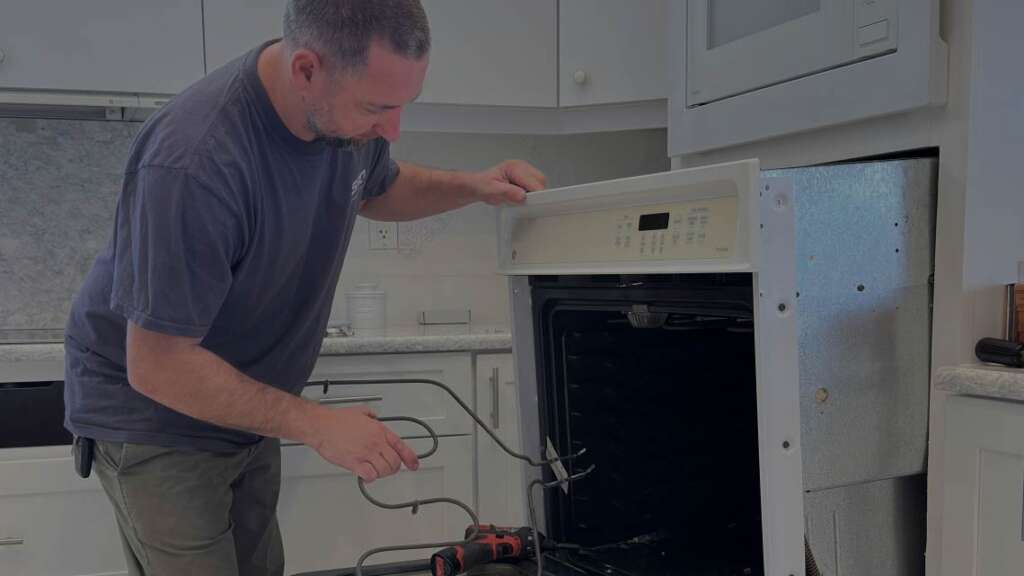
I take appliance fix Sarasota calls on dark oven lights now and then, and honestly most of them end with me handing someone a bulb. But I’ll walk you through the whole chain so you can sort the easy fix from the real problem yourself. This guide covers electric ovens.
Step One: Rule Out the Bulb
Before anything else, confirm it’s actually the bulb — it usually is.
- Let the oven cool completely.
- Then open the door and look at the bulb, which sits behind a glass or plastic cover inside the cavity, usually at the back or a rear corner.
- A burnt-out incandescent appliance bulb often shows it — a broken filament, a dark or cloudy spot on the glass.
If the bulb looks obviously dead, you’ve found it. If it looks fine, it still might be bad — filaments fail invisibly — so the real test is just replacing it. A new bulb is cheap enough that swapping it is both the test and the fix. Start there before assuming anything worse.
Buying the Right Replacement Bulb
This trips people up, so get it right before you unscrew anything.
- Oven bulbs aren’t regular household bulbs. They’re appliance bulbs rated for high heat — typically up to 300°C — because a normal bulb would shatter at oven temperatures. Grabbing a standard 40-watt bulb from the junk drawer won’t work and can be dangerous.
- Most ovens take a 40-watt appliance bulb with an E26/E27 screw base, but check your model — some use a smaller base or a halogen bulb. The size is usually printed in your manual, on the old bulb’s base, or searchable by model number. When in doubt, pull the old bulb and match it exactly.
How to Change an Oven Light Bulb Safely
Straightforward, but do it in this order — heat and electricity are both in play.
- Let the oven cool fully. Non-negotiable. The bulb and cavity hold heat long after you shut off, and oven bulbs get hot enough to burn you.
- Cut the power. Unplug the oven or flip its breaker. You don’t change a bulb on a live oven circuit.
- Remove the cover. Most lens covers twist off (quarter-turn counterclockwise) or have a wire bail holding them. Don’t force it — if it won’t twist, look for the clip.
- Swap the bulb. Unscrew the old one, screw in the matching new appliance bulb. Hold it with a clean cloth, not bare fingers — skin oil creates a hot spot that shortens bulb life.
- Reassemble and restore power. Cover back on, breaker back on, test.
Five minutes, done. If the new bulb lights up, you’re finished
New Bulb, Still Dark? Three Culprits
If you put in a fresh, correct bulb and it still won’t light, the bulb was never the problem. Now you’re looking at one of three things.
- The socket. The bulb socket inside the cavity takes a beating from years of heat cycles. Contacts corrode, the center tab flattens, or the socket cracks. A corroded socket can’t pass current to even a perfect bulb — and because it’s inside a 240-volt oven, it’s where an appliance repair in Sarasota FL tech takes over from DIY.
- The light switch. The button or door switch that turns the light on can fail.
- Wiring or control board. Less common, but a broken wire to the socket or a control-board issue can kill the light. This is where it stops being a five-minute fix.
The good news: two fresh bulbs both staying dark basically confirms it’s not the bulb, which saves the tech diagnostic time.
The Light Switch
Many ovens have a simple push-button or rocker switch for the light — sometimes on the control panel, sometimes on the door frame as a door-activated switch, like a fridge light.
- If yours is door-activated and the light doesn’t come on when you open the door, the door switch may have failed or stuck. Press it manually with the door open — if the light flickers, the switch is the issue.
- Testing one properly means a multimeter and often pulling the control panel or door trim — a good spot for an affordable oven repair call if the bulb and socket both check out.
When the Light Won’t Turn Off
The opposite problem, and it confuses people. If your oven light stays on constantly and won’t shut off, it’s almost always a stuck switch — the door switch jammed in the “on” position, or a failed panel switch stuck closed.
It’s not usually dangerous, but it’s not nothing either: an appliance bulb burning 24/7 generates heat continuously inside the cavity and burns out fast. Worth fixing so you’re not replacing bulbs monthly. The fix is the same switch replacement as above.
The Bulb That Keeps Blowing
If you’re replacing the oven bulb every few weeks, the bulb isn’t the real issue — something’s killing them early.
Usual suspects: you’re using a standard bulb instead of a heat-rated appliance bulb, and the oven heat destroys it fast. Or skin oil from bare-finger installation is creating hot spots. Or — the real-repair version — a voltage irregularity or a failing socket is overstressing each bulb.
Start with the easy fixes: confirm you’re using a proper appliance bulb and handle it with a cloth. If correct bulbs still keep blowing, the socket or wiring is the culprit, and that’s a tech diagnosis. A bulb that repeatedly blows can also be an early warning of an electrical fault worth catching.
When a Dark Light Means Something Bigger
Almost always the oven light is its own small, isolated thing. But a couple of scenarios make it worth more than a shrug.
- If the light went dark at the same time other oven functions acted up — the display glitched, the oven stopped heating, a breaker tripped — then the light isn’t the story. It’s a symptom of a bigger power or control-board problem. Diagnose the oven as a whole, not the bulb.
- If changing the bulb ever reveals scorched wiring, a melted socket, or a burnt smell inside the cavity, stop. That’s an electrical fault that needs a tech before you run the oven again.
SRQ Appliance Repair techs handle socket, switch, and wiring repairs across every brand, and can tell you in minutes whether a dark light is a three-dollar bulb or a sign of something on the circuit.
What You Can Do vs. When to Call
- Yours to handle: inspecting and replacing the bulb, buying the correct heat-rated appliance bulb, handling it with a cloth, and testing a door switch by pressing it manually. That solves the large majority of dark oven lights for a few dollars.
- Tech territory: a corroded or cracked socket, a failed light switch that needs panel removal, wiring faults, and anything where the light died alongside other oven problems. These need a meter and live around 240-volt components. If that’s where you’ve landed, a same day oven repair call gets it sorted in one visit.
The approach is simple: swap the bulb first, because it’s almost always the answer. If a correct new bulb stays dark, the problem moved to the socket, switch, or wiring — and that’s the line where a call makes sense.
Name:
SRQ Appliance Repair
Address:
3959 Yellowstone Cir Sarasota 34233
Phone:
(941) 233-0641
Website:
https://srq-appliancerepair.com/
Hours:
Mon-Fri: 8:00 a.m. – 7:00 p.m.
Sat: 10:00 a.m. – 2:00 p.m.
Sun: Closed
Frequently Asked Questions

Hi Sarasota! My name is Vitalii. I’ve been repairing home appliances in Sarasota and the surrounding areas for many years. I know this field inside and out! Here I share my experience and practical tips. I’d truly appreciate your shares, questions, and comments. Thank you!