


A dead electric oven — black display, no beep, no fan, nothing. Get that distinction right first, because it splits the whole diagnosis.
- Fully dark means the problem is upstream: voltage, the control board, or a lock nobody remembered enabling. The oven isn’t getting what it needs to even boot.
- An oven that beeps, shows the time, and takes button presses but never heats — that’s a heating-circuit problem wearing a working panel, and it’s a completely different repair.
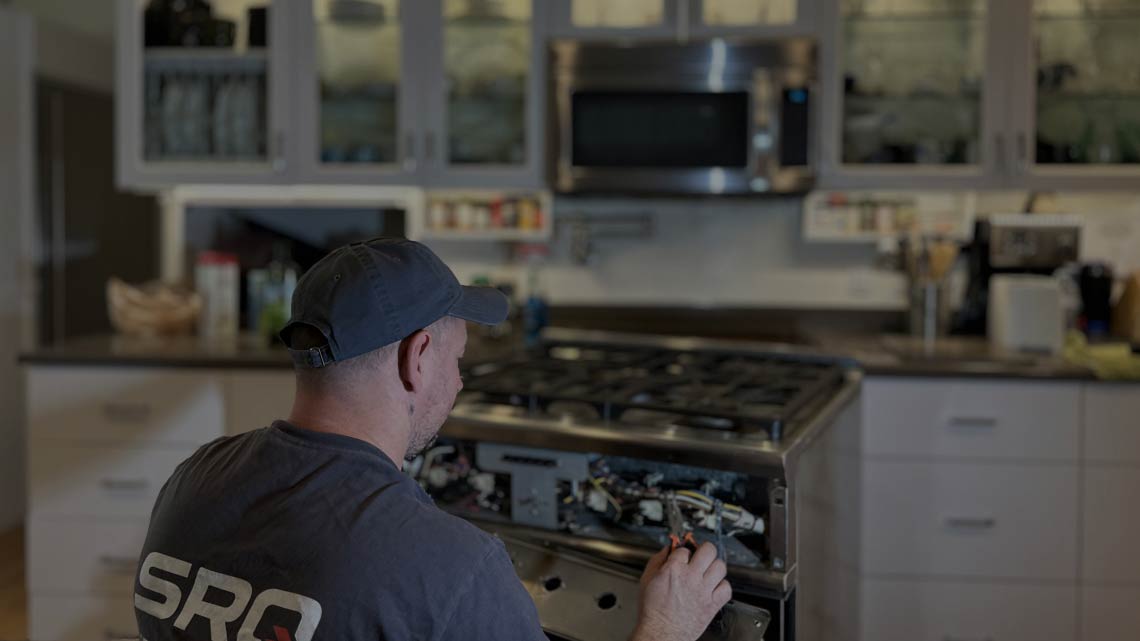
I run appliance fix Sarasota calls on dead ovens constantly, and the first thing I establish is which of those two you’ve got. A black panel and a lit-but-cold panel send you down opposite roads. So before anything else: is the display totally dead, or is it lit?
This guide is about the totally-dead electric oven — the black rectangle that won’t wake up.
The Five-Minute Checks That Fix Half of These
Don’t open anything yet. These clear a huge share of dead-oven calls for free.
- Reset the breaker — all the way. Electric ovens sit on a dedicated double-pole 240-volt breaker. Here’s the catch: a breaker can trip into a halfway position that still looks like “on.” Push it firmly to OFF, wait thirty seconds, then snap it back to ON. That “firmly off” step is the entire point — a half-reset resets nothing.
- Check the wall outlet. Pull the range out a few inches and look at the plug. Charred or discolored prongs mean the outlet itself is degrading. Plug a lamp into a nearby kitchen outlet on the same circuit to confirm power’s even reaching the wall.
- Look for a control lock. Covered in the next section — common enough to earn its own.
- Rule out Sabbath or demo mode. Both light the panel while keeping heat off, and both are easy to trigger by accident. Your manual has the exit sequence.
Four checks, no tools, and you’ve cleared maybe 40% of dead-oven calls.
1. The Lock You Forgot You Turned On
This one embarrasses people, so let me save you the trouble. Modern ovens have a control lock — sometimes labeled child lock — that freezes the whole panel. Once it’s on, the oven looks stone dead. No button responds. But it’s not broken; it’s locked.
SOLUTION: Find the small padlock icon on the display. Turning it off varies: Whirlpool and Frigidaire usually want the lock key held for three seconds. Samsung often needs five to seven on newer models. GE changes by model line.
One warning on Whirlpool — hunt for the lock by mashing buttons and you can accidentally flip the oven into demo mode, which then needs its own separate exit. I got called to a “dead oven” in Palmer Ranch that turned out to be a control lock a house-sitter bumped while wiping the panel down.
2. Totally Dead: When One Leg of Power Drops
You’ve reset the breaker, checked the lock, confirmed the outlet — and the oven’s still a black rectangle. Now we’re past the easy stuff.
Electric ovens run on two 120-volt legs bundled into 240. Lose one leg and most modern ovens won’t power up at all, because the control board wants to sense both legs before it boots. The oven isn’t dead — it’s half-fed, and it won’t run on half.
Causes: a loose terminal at the breaker, a breaker that reads “on” but only passes one leg, or a burnt connection somewhere upstream. A multimeter at the outlet sorts this out in under a minute. Without one, you’re guessing — and this is where an appliance repair in Sarasota FL tech with a meter keeps you from throwing parts at a power problem.
3. The Junction Box Nobody Thinks About
Wall ovens especially. They connect to the house through a small junction box bolted into the cabinet behind the unit — and that box is where a lot of dead ovens are born. Six or seven years of heat cycling loosens the screw terminals inside. A loose terminal arcs. The arc carbonizes the copper. Eventually the connection just quits. The box cover stays on the whole time, so nothing looks wrong until you pull it and find scorched wire.
Here’s the pattern: anytime a wall oven got pulled out for cleaning or a cabinet reno, the wiring took a little stress. A year or two later it surfaces as a dead oven. If yours died months after kitchen work, that box is the first place I’d look. A quick call to an oven repair tech pins it down without you having to open a live junction box yourself.
4. Fried Board After a Storm
This is a Florida special, and Sarasota gets it bad. Tropical storm season sends control boards to the shop in waves. Lightning doesn’t have to hit your house — a utility-line surge from a strike a few blocks over does the job. Oven’s working Friday, then Monday after a weekend of storms it’s dark and silent. In my experience, Samsung, LG, and the higher-end GE Café and Profile boards take surge damage harder than the older, simpler Whirlpool boards. More sensitive electronics, less tolerance.
If your oven died right after a storm and the breaker and outlet both test fine, put the control board at the top of the list. Once it’s replaced, get a surge protector on that circuit — cheapest insurance against the next round of Gulf Coast weather. A same day oven repair call gets a fried board confirmed and swapped, often in one visit.
There’s also a small transformer inside the oven that steps voltage down for the control board. When it fails — not common, but it happens — you get the same total blackout as a dead board, just cheaper to fix once someone diagnoses it.
5. The Half-Working Touch Panel
A middle-ground failure that confuses people. The bake button responds but broil doesn’t. Numbers register but Start does nothing. Certain zones of the touch panel feel dead when you tap them. That’s the membrane switch — the touch layer behind the front glass — partially failed.
Two usual causes: five-plus years of daily use wearing it out, or moisture and spills creeping under the panel and shorting part of the membrane. Sarasota humidity doesn’t help. Membrane replacement is a genuine tech job — parts match by exact model number, not just brand, and panel removal varies wildly between manufacturers.
Panel Lights Up but Nothing Happens
Worth separating out, because people land here by mistake. If your display lights up, you can navigate the menu, buttons beep — but the oven never starts heating — that’s not a “won’t turn on” problem. That’s a heating-circuit fault behind a working panel. The diagnosis runs through bake elements, thermal fuses, and relays, not power supply. Different path entirely.
If that’s your symptom, this isn’t your article — you want the “oven won’t heat” diagnosis instead.
Wall Ovens and Double Ovens
These carry their own quirks.
most “won’t turn on” calls trace back to that hidden junction box, not anything inside the appliance. Check it first if yours is built in.
on most models, the upper and lower cavities share one control board. Board dies, both go dark together. But if one cavity works and the other doesn’t, the board’s fine — the problem’s isolated to the dead side, usually a failed relay or occasionally a bad temperature sensor. That distinction is the difference between swapping a relay and buying a whole board.
Where DIY Ends
Straight talk before you grab tools. Electric ovens are 240 volts. That’s not “a bit more than a wall outlet” — it’s enough to put you in the hospital. Cut power at the breaker before any panel comes off, and don’t trust that the breaker actually killed it until you’ve tested with a meter you know how to use.
The hard stop: anything scorched, melted, or smelling of burnt plastic when you open the unit — walk away and call a pro. That smell isn’t just a bad part; it’s an active electrical fault that needs safe diagnosis.
SRQ Appliance Repair techs handle dead electric ovens across every brand, carry common boards, fuses, and membrane switches on the truck, and — just as useful — can tell you within minutes whether the fault is the oven or the house wiring feeding it. If it’s the wall or the breaker, you need an electrician, not an appliance tech. Knowing which before you spend money is the whole game.
Name:
SRQ Appliance Repair
Address:
3959 Yellowstone Cir Sarasota 34233
Phone:
(941) 233-0641
Website:
https://srq-appliancerepair.com/
Hours:
Mon-Fri: 8:00 a.m. – 7:00 p.m.
Sat: 10:00 a.m. – 2:00 p.m.
Sun: Closed
Frequently Asked Questions

Hi Sarasota! My name is Vitalii. I’ve been repairing home appliances in Sarasota and the surrounding areas for many years. I know this field inside and out! Here I share my experience and practical tips. I’d truly appreciate your shares, questions, and comments. Thank you!